

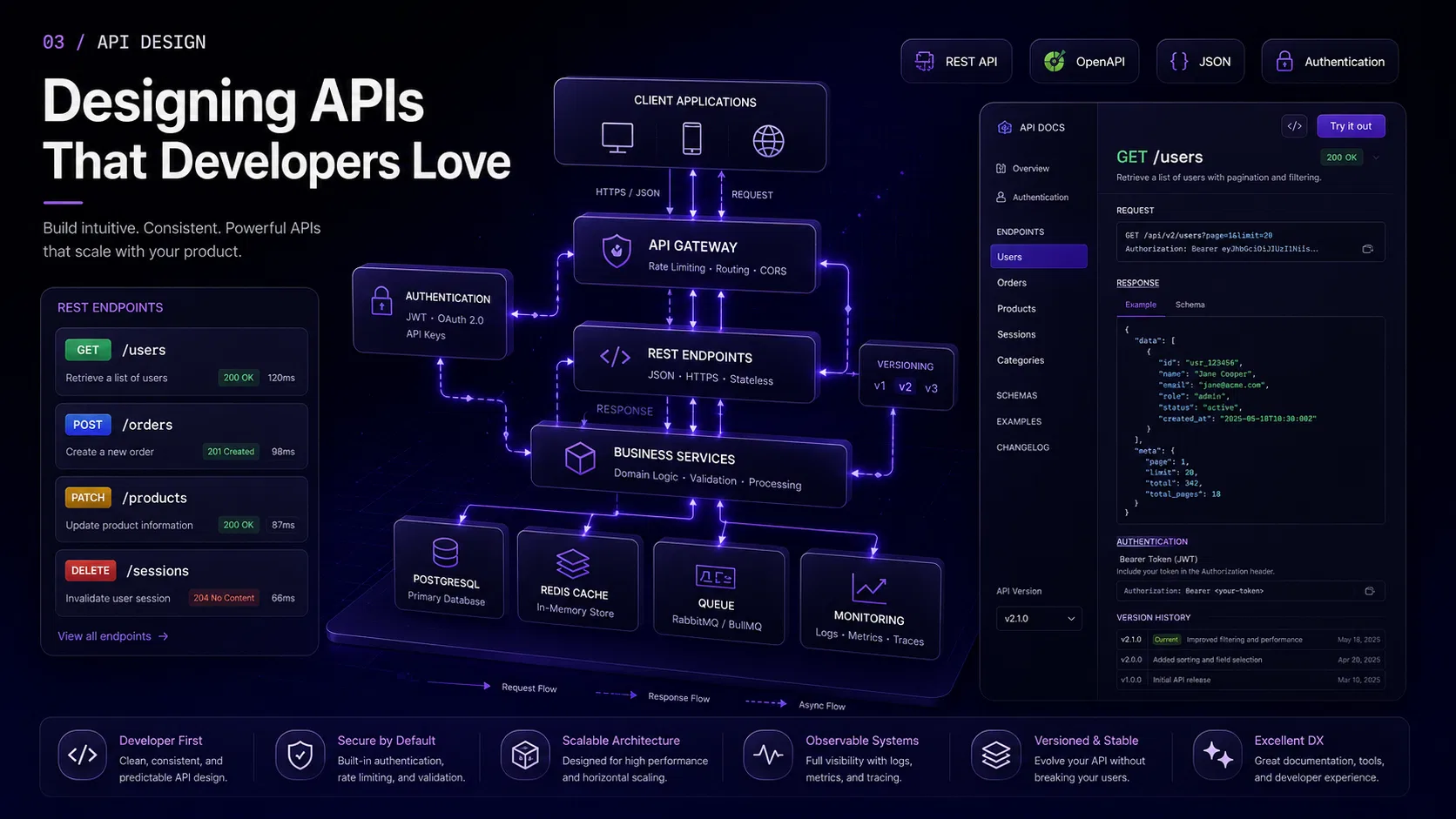
APIs are the foundation of modern software systems. Whether you're building internal services or public developer platforms, thoughtful API design improves developer experience, reduces integration complexity, and ensures your system can evolve without breaking existing clients. This article explores the principles behind designing REST APIs that remain clean, scalable, and maintainable.
What you'll learn:
- 🌐 Core principles of well-designed REST APIs
- 📐 Designing consistent endpoints, resources, and naming conventions
- 🔐 Authentication, authorization, and API security best practices
- 📄 Versioning strategies without breaking clients
- ⚡ Pagination, filtering, sorting, and performance optimization
- 📚 Documentation strategies that improve developer experience
Key Insights
🌐 APIs Are Products
Treat your API as a product with users. Consistency, discoverability, and documentation matter just as much as functionality.
📐 Consistency Builds Confidence
Predictable resource naming, standardized responses, and meaningful HTTP status codes reduce learning curves and integration errors.
🔐 Security Starts with Design
Authentication, authorization, input validation, rate limiting, and least-privilege access should be part of the API architecture—not afterthoughts.
📄 Design for Change
Version APIs thoughtfully and maintain backward compatibility whenever possible to avoid disrupting existing consumers.
⚡ Performance Matters
Efficient pagination, filtering, caching, and optimized database queries improve responsiveness while reducing infrastructure costs.